


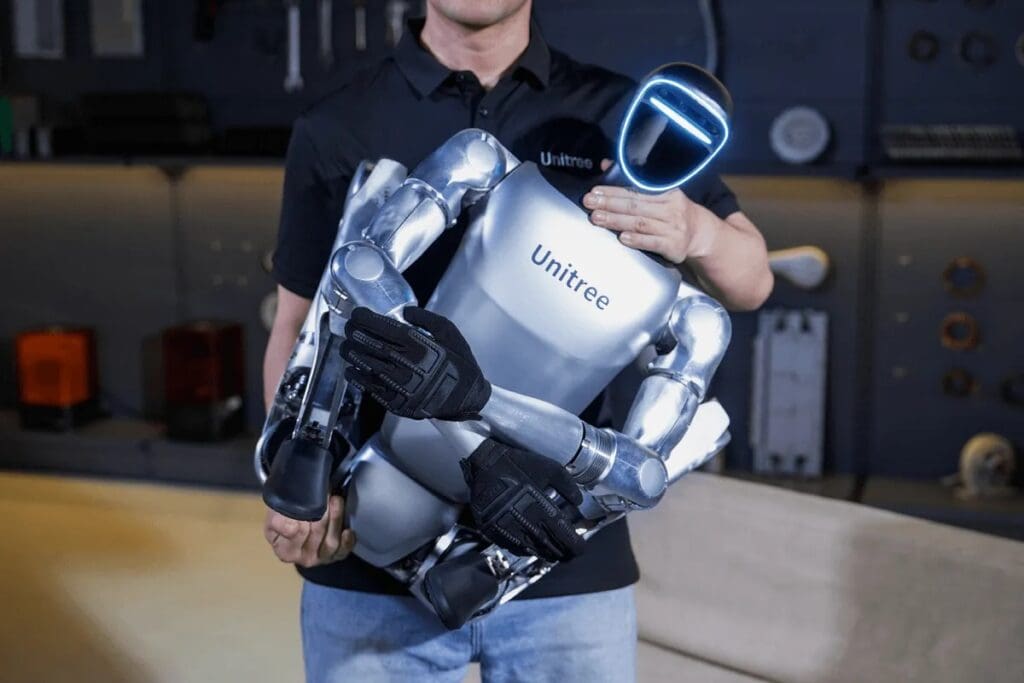
I still can’t quite wrap my head around what I watched this morning. I was digging through the latest updates in the robotics space when I stumbled across the footage of the new Unitree G1. I sat at my desk and watched this highly advanced humanoid machine take heavy, aggressive punches to the torso without losing its balance. I watched it effortlessly smash walnuts to pieces with its robotic hands, and then—as if that wasn’t enough—I saw it completely fold itself up into a compact, tiny shape that you could easily toss into the trunk of a standard sedan.
My immediate reaction? Literally blew my mind. But as I kept watching, a secondary feeling crept in. I have to ask myself: is this incredible piece of technology the ultimate home assistant we’ve been waiting for, or is it the beginning of something just a little bit terrifying?
Let’s dive deep into why the Unitree G1 isn’t just another tech demo, but a massive wake-up call for how close we are to living alongside humanoid robots.
The Price Tag That Changes Everything
If you’ve been following my articles here on Metaverse Planet, you know I’ve covered some incredibly expensive hardware. Historically, humanoid robots like Boston Dynamics’ Atlas were multimillion-dollar research projects reserved for military contracts or massive tech conglomerates.
Then comes the Unitree G1.
It costs around $16,000. Let that sink in. We are looking at a highly advanced, bipedal humanoid robot that costs less than a decent used car. When I realized the price point, everything shifted for me. This isn’t a prototype locked away in a lab anymore; this is consumer-level pricing (admittedly, luxury consumer, but still). By driving the cost down this aggressively, Unitree is signaling that humanoid robots are moving from the research phase directly into the commercial and residential markets.
Specs That Read Like a Sci-Fi Novel

I don’t just want to hype this up without looking under the hood. The sheer engineering packed into this frame is staggering. Here is what caught my eye the most:
- Agility and Speed: The G1 doesn’t just awkwardly shuffle around. It runs at an impressive 2 meters per second. That is a brisk jog! If you need it to fetch something from across the house or warehouse, you won’t be waiting all day.
- 3D LiDAR Vision: This robot uses advanced 3D LiDAR sensors alongside depth cameras to map its environment. It sees the world much clearer and with more dimensional accuracy than I ever could. It instantly calculates distance, depth, and obstacles in real-time.
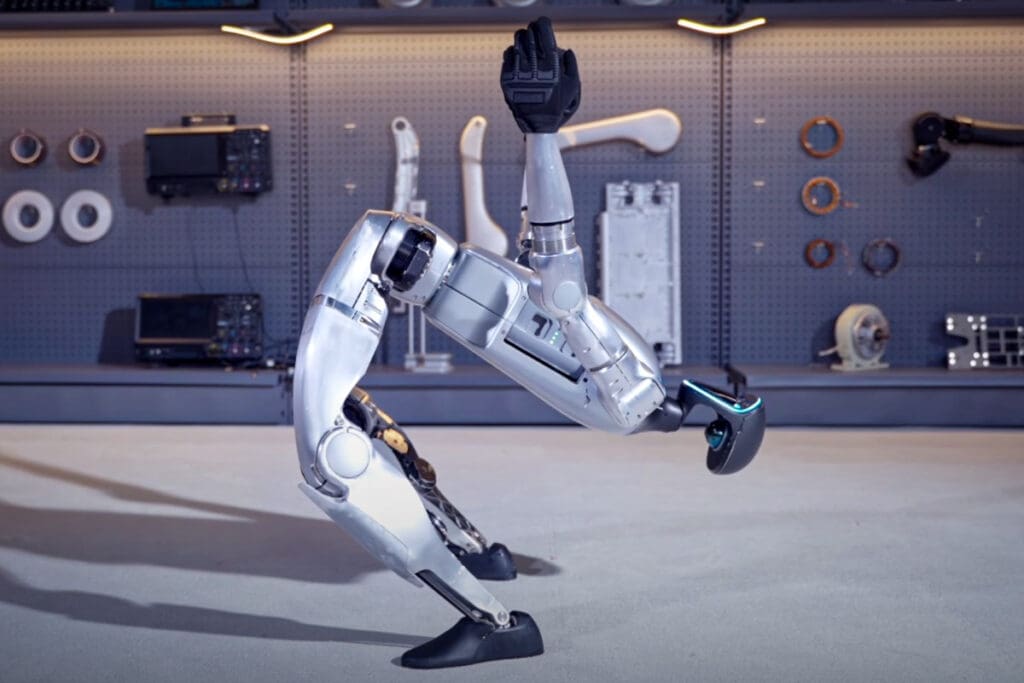
- Extreme Flexibility: The folding mechanism is what really sold me on the engineering brilliance. It has 23 to 43 joint degrees of freedom (depending on the model). The fact that it can curl up into a small, easily transportable package solves one of the biggest logistical nightmares of humanoid robots: storage and transport.
- Precision and Power: The “walnut smashing” demonstration wasn’t just a party trick. It proved that the robotic hands possess the raw force required to crack a hard shell, combined with the precise motor control to stop before crushing the table underneath.
The “Creepy” Factor: Taking Punches and Bouncing Back
Let’s talk about the punching video. Seeing a human engineer violently shove and punch the robot is a standard stability test in robotics, but watching the G1 dynamically adjust its footing, absorb the kinetic energy, and bounce right back into a neutral stance gave me absolute chills.
On one hand, it’s brilliant engineering. If this robot is going to be in our homes, carrying groceries or helping the elderly, it needs to be able to recover from a trip, a slip, or a dog running into its legs.
On the other hand? Watching a faceless machine take a human punch without flinching feels like a scene pulled straight out of a dystopian movie. It triggers that uncanny valley instinct in my brain that says, “This thing is unstoppable.” ## Is This the Ultimate Home Assistant?
So, what happens when we bring the Unitree G1 out of the testing facility and into our daily lives?
I genuinely believe we are looking at the foundational hardware for the next generation of smart home ecosystems. Imagine an AI—perhaps an embodied version of the large language models we use today—downloaded into the G1.
- It could cook basic meals.
- It could organize your physical space while you are working in a virtual Metaverse environment.
- It could act as a physical security presence.
But the hardware is only half the battle. For me, the real question is how safe the software will be. A robot with this much physical power and agility needs an absolutely bulletproof AI guardrail system. I would love to have a robot fold my laundry, but I need to be 100% certain it won’t accidentally use that same “walnut-smashing” grip on my favorite coffee mug—or worse, my cat.
My Final Thoughts

Researching the Unitree G1 was a rollercoaster. It is undeniably a masterpiece of modern engineering and an massive leap forward in making robotics accessible and affordable. The 3D LiDAR, the running speed, the terrifyingly good balance—it’s all proof that the future we’ve been writing about is already here.
Yet, I can’t shake that slight feeling of unease. It’s that perfect mix of awe and anxiety that only truly disruptive technology can deliver.
I want to know where you stand on this. If you had an extra $16,000 sitting in the bank right now, would you buy the Unitree G1 to help around the house, or does the idea of a humanoid robot that can take a punch sleeping in your living room completely freak you out? Drop your thoughts in the comments below, let’s debate this!