


I still can’t stop thinking about that fruit fly experiment.
If you missed it, researchers recently achieved something that sounds like pure science fiction: they mapped the entire brain of a fruit fly. That is roughly 130,000 neurons and 50 million connections, entirely digitized. When I was reading the research paper, I honestly felt a cold chill run down my spine. It’s a monumental leap for science, but it immediately sent my mind spiraling into a rather terrifying rabbit hole.
If scientists can successfully map and digitize 130,000 neurons today, how long is it really going to take until they map our 86 billion? The technology is scaling at a breakneck pace. But as I dig deeper into the mechanics of mind uploading, the real question that scares me isn’t when we will do it, but what exactly we are doing.
If they make a digital twin of my brain, is it really me, or just a highly sophisticated ghost in the machine? Today, I am diving deep into the reality of digital consciousness, and why transferring your mind to a computer might not be the immortality you are hoping for.
The Monumental Gap: From Flies to Human Consciousness
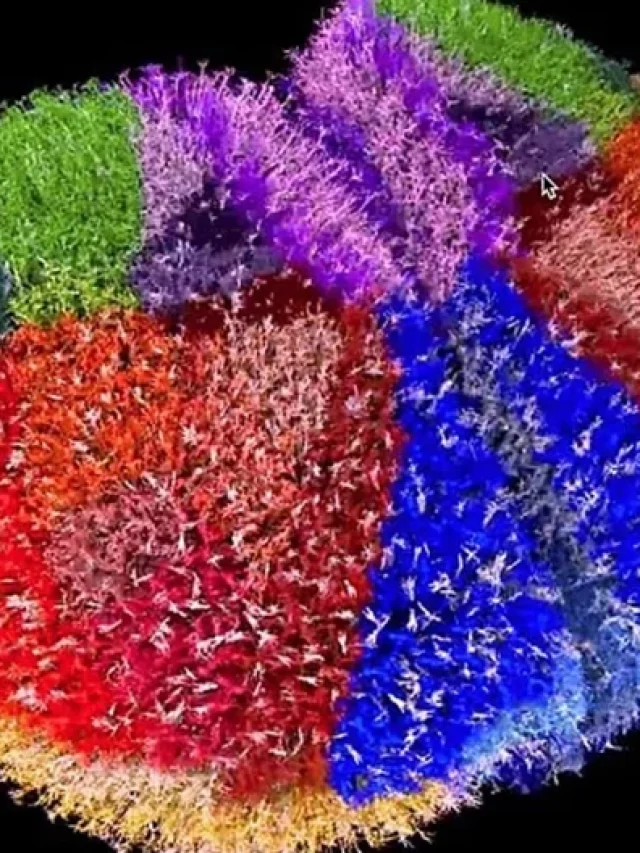
Let me put the numbers into perspective, because the sheer scale of the human brain is hard to wrap your head around.
- The Fruit Fly: 130,000 neurons.
- The Mouse: Roughly 71 million neurons.
- The Human: 86 billion neurons, with over 100 trillion synaptic connections.
To map my brain—every memory of my childhood, the taste of my favorite coffee, the exact way I feel when I listen to a certain song—you wouldn’t just need to take a snapshot of those 86 billion neurons. You would need to capture the exact chemical states, the neurotransmitter levels, and the microscopic electrical impulses firing in real-time.
When I look at the current state of neurotechnology, I realize we are essentially trying to copy an ocean by studying a drop of water. But let’s play devil’s advocate. Let’s assume Moore’s Law holds up, quantum computing matures, and fifty years from now, we have a scanner capable of instantly digitizing human consciousness without destroying the biological brain in the process.
What happens the moment you press “Enter”?
The Copy Problem: You Are Left Behind

Here is the philosophical nightmare that keeps me awake at night. The pop-culture dream of mind uploading—like what we see in Black Mirror or Cyberpunk—often treats consciousness like a file you can just cut and paste into a USB drive.
But biology doesn’t work like a computer directory. You cannot “move” consciousness; you can only copy its structure.
Imagine I walk into a clinic tomorrow, sit in a chair, and have my brain perfectly scanned. The machine boots up, and on the screen in front of me, a digital avatar opens its eyes. It has all my memories. It thinks exactly like me. It even believes it is me.
But I am still sitting in the chair.
My biological eyes are still looking at the screen. I haven’t transferred my soul into the machine; I have simply birthed a perfect clone of my mind at this exact millisecond. If the doctor suddenly told me, “Okay, the upload was successful, now we are going to incinerate your physical body,” I would be absolutely terrified! The original “me” is about to die. The entity living forever in the Metaverse isn’t me—it’s just a backup file convinced it’s the original.
The Divergence: Slowly Becoming a Stranger

Let’s take this a step further. Let’s say my physical body passes away naturally, but my digital twin lives on in a sprawling, limitless Metaverse. At the moment of my death, the digital version of me is a perfect 1-to-1 replica.
But what happens a week later? A year later? A century later?
Our consciousness is completely anchored to our environment and our physical bodies. We think the way we do because we feel hunger, pain, exhaustion, and the warmth of the sun. We are shaped by biological limits.
If my digital twin is suddenly living in a server where it feels no fatigue, can process information a million times faster, and interacts with an entirely virtual world, its experiences will instantly begin to drastically diverge from anything a human could understand.
- The loss of biological urgency: Without the fear of death or physical harm, how does my digital twin value time?
- Infinite memory: If my digital mind never forgets a single detail, how does that change my personality? Forgetting is a crucial mechanism for human emotional survival.
- Altered perception: How do you experience the Metaverse when you can literally see the code, change your environment with a thought, and communicate via direct data streams?
Within a year, that digital entity would evolve into something completely alien to the original Ugu. It would be a stranger wearing my memories like a vintage suit.
The Hardware of the Soul

I also have to wonder about the physical reality of running a simulated mind. A human brain runs on about 20 watts of power—barely enough to light a dim bulb. Yet, it powers the most complex intelligence in the known universe.
To run a real-time, perfectly accurate simulation of a human brain using current silicon-based architecture would require a massive supercomputer consuming gigawatts of energy. This brings up an uncomfortable realization:
Your “immortality” would be entirely dependent on server maintenance, electricity grids, and corporate funding. What happens if the company hosting your consciousness goes bankrupt? Do they just unplug you? Is a server outage considered murder? The idea of my eternal soul being subject to an “End User License Agreement” makes my stomach turn.
Would I Risk It?
Whenever I look at the rapid advancements in brain-computer interfaces, from Neuralink to these incredible mapping projects, I feel a deep sense of conflict.
The technologist in me is absolutely fascinated. The ability to back up human knowledge, to allow brilliant minds to continue solving problems long after their bodies have failed, is a seductive promise.
But the human in me? I am terrified of the illusion. Transferring your mind to a computer seems less like cheating death and more like building a highly advanced monument to yourself—a monument that talks, thinks, and slowly forgets what it means to be human.
I don’t think I would do it. I think the beauty of the human experience is intrinsically tied to its fragility. We are temporary, and maybe that’s exactly what gives our choices, our loves, and our lives any real meaning.
But that is just my perspective, and I know a lot of people would jump at the chance to live forever in the digital realm. I really want to know where you stand on this. If you had the chance to safely copy your mind into the Metaverse today, knowing the original you would eventually die, would you risk it for digital immortality? Let me know your thoughts in the comments! I read every single one.
Come on, subscribe right now and support me please. We have so much more of the future to explore together.
#DigitalImmortality #MindUpload #Metaverse #FutureTech #SimulationTheory #Cyberpunk