


I’ll admit it right off the bat—I grew up watching sci-fi movies where a captain yells “engage,” the stars stretch into long, glowing lines, and boom, the crew is in another galaxy before their coffee even gets cold. I always thought that traveling at the speed of light would make us the undisputed masters of the universe. It felt like the ultimate cheat code to cosmic exploration.
But recently, I sat down and really researched the actual cosmic distances. Let me tell you, what I found didn’t make me feel powerful; it completely terrified me.
Even if we somehow build a ship that goes at the absolute speed limit of the cosmos—nearly 300,000 kilometers per second—we would still be stuck in a tiny metal box for thousands, if not millions, of years just to cross our own galactic neighborhood. The universe is so unfathomably huge that the speed of light is basically a cosmic crawl.
Let’s break down the journey. If I handed you the keys to a light-speed spaceship today, where could we actually go?
The Local Neighborhood: Where “Fast” Actually Feels Fast

Let’s start small to get a false sense of security. In our immediate cosmic backyard, traveling at light speed feels exactly like the sci-fi movies promised.
- The Moon: If I hopped in my light-speed ship, reaching the Moon would take exactly 1.3 seconds. I wouldn’t even have time to unbuckle my seatbelt.
- Mars: A trip to the Red Planet would take anywhere from 3 to 22 minutes, depending on where Earth and Mars are in their orbits. Imagine taking a quick coffee break and stepping out onto Martian soil.
- The Sun: A casual flight to our star? Just 8 minutes and 20 seconds.
- Jupiter: We could do a flyby of the gas giant in about 35 to 40 minutes.
Honestly, looking at these numbers, I thought, “This is great! The solar system is basically my playground.” I could tour the rings of Saturn before lunch and be back on Earth for dinner. But then, I looked slightly past Pluto, and the terrifying reality of deep space set in.
The Interstellar Reality Check
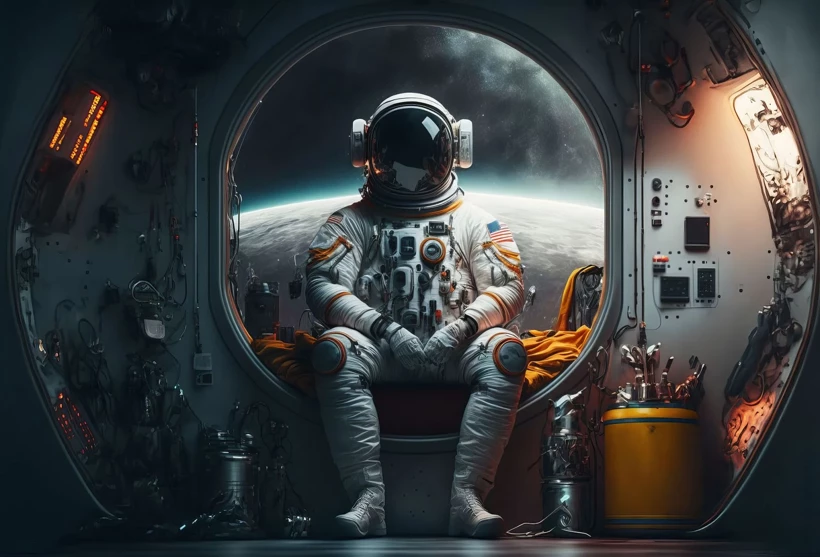
The moment we decide to leave our solar system, the speed of light starts to look embarrassingly slow. It’s like trying to cross the Pacific Ocean in a paddleboat.
- The Oort Cloud: To truly leave the gravitational grip of our solar system, we have to pass through the Oort Cloud. At light speed, it would take us over 1.5 years just to clear our own front porch.
- Proxima Centauri: This is our absolute closest stellar neighbor. At the speed of light, it would take 4.24 years to get there.
Think about that for a second. Over four years locked in a spaceship. Think about what you were doing four years ago. That entire span of time, you’d just be staring out of a window at an endless black void, waiting to reach the closest possible destination. And that’s just a one-way trip! If I wanted to go there, look around, and come back to tell you guys about it, that’s nearly a decade gone.
The Snail’s Pace Across the Milky Way

If four years sounds bad, let’s talk about our own galaxy. The Milky Way is a sprawling, beautiful, and terrifyingly massive structure. It is an ocean of stars, and light speed is barely a drop in it.
- The Center of the Milky Way (Sagittarius A):* Let’s say we want to go see the supermassive black hole at the center of our galaxy. That trip will take 26,000 years.
This was the exact moment in my research where I just had to close my laptop and take a deep breath. 26,000 years! Human civilization as we know it—written language, agriculture, the first cities—is only about 10,000 years old. If an ancient ancestor had departed for the galactic center in a light-speed ship at the dawn of human history, they wouldn’t even be halfway there today.
- Crossing the Milky Way: To go from one edge of our galaxy to the other? 100,000 years. Even at the universe’s ultimate speed limit, we are essentially standing still.
The Deep Abyss: Andromeda and Beyond

I always dreamed of seeing another galaxy up close. I used to look at Hubble Space Telescope images and imagine what it would be like to fly through those nebulas. But the numbers here are just soul-crushing.
- The Andromeda Galaxy: Our closest major galactic neighbor is 2.5 million light-years away.
If I left today at the speed of light, I wouldn’t arrive until 2.5 million years from now. By the time I got there, humanity might have evolved into a completely different species, or we might not exist at all. The Earth’s continents would have shifted into a new Pangea. The sheer scale of that isolation is hard for my brain to process.
The Ultimate Plot Twist: Time Dilation
Now, if you know a bit about physics, you might be screaming at the screen right now: “Ugu, you forgot about Einstein!”
You are absolutely right, and this is where the story gets incredibly dark. The weirdest part about traveling near the speed of light is a concept called Time Dilation.
According to the theory of relativity, the faster you move through space, the slower you move through time relative to the people you left behind. If I were on a ship traveling at 99.99% the speed of light, my biological clock would slow down drastically.
For me, a trip to the center of the galaxy might only feel like a few years. I would age normally on the ship, read some books, maybe learn to play the guitar. But when I look out the window upon arrival—or if I ever decided to turn back home—26,000 Earth years would have passed.
To me, this is the most heartbreaking realization. Light-speed travel isn’t just a physical journey; it’s a one-way time machine into the future. You can go explore the stars, but the price of the ticket is everyone and everything you have ever loved. You leave Earth, and you can never, ever go back to the world you knew. The Earth you return to would be completely alien.
Are We Meant to Stay Home?
I started this thought experiment hoping to write an exciting, uplifting piece about conquering the cosmos. Instead, I found a deep sense of humility. The universe is structured in a way that keeps things aggressively isolated. It’s as if the cosmos put up these massive distance barriers to quarantine us.
Maybe we aren’t supposed to physically hop between galaxies using sheer speed. As a tech enthusiast, I like to think our future lies in understanding the deep physics of the universe—like wormholes, or bending space-time itself with something like an Alcubierre warp drive. We don’t need to move through space faster; we need to figure out how to fold the map. Because right now, relying on “fast” is an illusion.
Writing this made me appreciate our little blue planet so much more. The universe out there is cold, vast, and terrifyingly empty. As much as I love technology and the idea of exploration, the thought of being trapped in a metal tube while millennia pass by outside is a nightmare I wasn’t prepared for. It makes the air we breathe, the people we love, and the ground we walk on feel infinitely more precious.
So, I have to ask you: Knowing that returning home means returning to a completely alien future… Would you dare to take a 26,000-year one-way trip to the center of the Milky Way, or would you stay safely on Earth? Let me know in the comments! 👇