


I was neck-deep in some fresh data engineering research last night, looking for the latest trends in predictive analytics, when I stumbled across a World Cup prediction model that absolutely blew my mind.
We all know that data has invaded sports. From smart wearables tracking a player’s every heartbeat to tactical algorithms calculating expected goals (xG), the beautiful game is increasingly becoming a numbers game. But researchers from the universities of Innsbruck and Dortmund just took this to an entirely different stratosphere. They didn’t just build a statistical model; they loaded millions of micro-data points—ranging from individual player injury reports to complex tactical metrics—into a massive machine learning algorithm and ran 100,000 parallel simulations of the tournament.
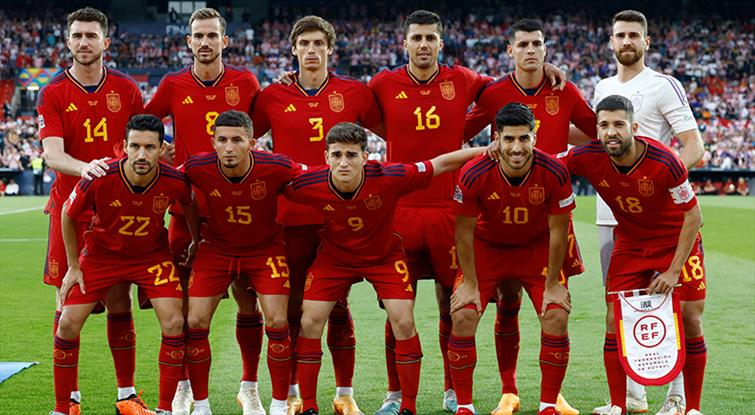
The machine learning algorithm confidently crowned Spain as the champion. Honestly, based on their tactical discipline and raw talent pool, that makes analytical sense. But the absolute shocker? The algorithm defied almost every traditional betting odd and placed Turkey in the grand final.
Seeing a result like this immediately made me pause. It completely upends everything we think we know about how sports analysis works. Let’s dive into exactly how this AI pulled off such a wild prediction and what it means for the future of sports.
The Data Engineering Behind the Magic
When I say these scientists built a massive model, I’m not talking about a simple Excel spreadsheet predicting match outcomes based on FIFA rankings. The architecture behind this prediction is a masterclass in modern data science.
To simulate a tournament 100,000 times, you need an ensemble machine learning approach. Here is what the algorithm was actually chewing on to reach its conclusions:
- Granular Player Statistics: It wasn’t just looking at goals and assists. The model digested pass completion rates under pressure, sprint speeds, heat maps, and even recovery times between intense matches.
- Historical Team Matchups: The algorithm cross-referenced decades of international matchups, adjusting weights for modern tactical shifts.
- The Injury & Fatigue Matrix: This is where AI truly outshines human analysts. The model calculated the probability of key players sustaining injuries based on their club season workload, and adjusted a team’s win probability dynamically throughout the simulated tournament.
- Bookmaker Consensus: Interestingly, the researchers also fed the model structural odds from global bookmakers, using financial markets as a baseline to measure “wisdom of the crowd” before the AI layered its own predictive logic on top.
By combining all these variables, the AI was able to see past the “big names” and identify underlying structural efficiencies. It saw that Spain possessed the perfect mathematical balance of possession retention and defensive solidity required to win a knockout tournament.
Why the AI Chose Turkey for the Final

This is the part that genuinely fascinates me. If you ask a panel of traditional TV pundits to name the finalists, you’ll hear the usual suspects: France, Brazil, Argentina, England. An algorithm, however, doesn’t care about brand names, legacy, or media hype. It only cares about the math.
So, what did the machine learning model see in Turkey that the pundits missed?
- Statistical Variance and Momentum: Knockout football is highly susceptible to momentum. The data likely highlighted Turkey’s high-pressing efficiency and counter-attacking speed—metrics that mathematically disrupt possession-heavy teams.
- Youth and Recovery: Tournaments are grueling. A squad with a lower average age and high aerobic capacity recovers faster between the tight three-day match turnarounds. The AI calculates fatigue decay, and Turkey’s physical metrics likely gave them a massive late-tournament advantage in the simulations.
- The “Chaos” Variable: In predictive modeling, some teams have a higher standard deviation in their performances. They can be unpredictable. The AI recognized that in a scenario where everything clicks, Turkey’s ceiling is statistically high enough to bypass the traditional giants.
The End of the Traditional Sports Pundit?
I honestly think the way this technology is destroying traditional sports punditry is incredible to witness. For decades, we have relied on former players sitting in TV studios, giving us their “gut feelings” about who wants it more. They talk about “heart,” “desire,” and “knowing how to win.”
But let’s be real—can a human brain simultaneously process the exact passing accuracy of a midfielder under high pressure in the 85th minute, cross-reference it with the opposing defender’s fatigue levels, and spit out an objective win probability? No.
The Innsbruck and Dortmund model proves that the future of sports analysis isn’t happening in a broadcasting studio; it’s happening in server racks and cloud computing environments. As machine learning models become even more sophisticated, integrating real-time computer vision tracking from the stadiums directly into the AI, the gap between what humans can see and what the data can prove will only widen.
The Uncalculable Variable: The Human Spirit
Despite how much I love the technology behind this, I have to play devil’s advocate. We are talking about football, not chess. It’s a game played on grass, in the rain, surrounded by 80,000 screaming fans.
When I look at this incredible AI predicting a Spain vs. Turkey final, a massive question pops into my head. Can an algorithm really calculate the human spirit on the pitch?
Machine learning models are brilliant at finding patterns in historical data. But how does a neural network quantify a captain’s locker room speech when a team is down 2-0 at halftime? How does a mathematical equation account for the sheer adrenaline of a 19-year-old rookie making his debut on the world stage? How do you code the collective emotional weight of a nation pushing their team forward in the 90th minute?
Turkey, in particular, is historically famous for exactly this. Their footballing DNA is built on raw emotion, chaotic comebacks, and pure, unfiltered passion. It’s incredibly ironic—and poetic—that the most coldly logical entity on earth, an AI algorithm, predicted a final appearance for one of the most emotionally driven teams in the sport.
What’s Next?
As we push further into the era of Web3 and the Metaverse, this kind of predictive data will become directly integrated into our viewing experiences. Imagine watching the next World Cup through augmented reality glasses, where AI models like the one from Dortmund and Innsbruck overlay real-time win probabilities directly onto the pitch based on the exact positions of the players. The data won’t just be a post-match report; it will be the lens through which we experience the game.
But for now, I’m left staring at this simulation data, completely torn between the brilliant logic of the machine and the chaotic beauty of the sport.
I want to hear from you. Are we reaching a point where algorithms understand the game better than the coaches themselves, or are there human elements on the pitch that no machine will ever be able to compute? Let me know whose side you are on in the comments, and don’t forget to subscribe and support the platform!