


Ever found yourself staring up at the night sky, trying to wrap your head around just how far away everything is? The other night, I was re-watching Stanley Kubrick’s 2001: A Space Odyssey. As I watched the Discovery One silently glide through the terrifying, vast emptiness of space toward Jupiter, a thought hit me: reality is actually much more mind-bending than classic sci-fi makes it seem. We casually throw around numbers like “millions” and “billions” when talking about space, but human brains just aren’t wired to comprehend that scale. On average, Jupiter is about 628 million kilometers away from Earth. Sure, that sounds like a lot, but what does that actually mean?
I decided to crunch the numbers and translate this unimaginable cosmic distance into everyday human terms. Fair warning: the results made me feel completely insignificant, but also incredibly curious about our place in the universe.

The Crushing Scale of the Solar System

Before we pack our bags for the ultimate road trip, we need to understand the route. Earth and Jupiter are constantly moving in their elliptical orbits around the Sun. This means the distance between us is never static.
- Closest approach: When Earth and Jupiter are on the same side of the Sun (opposition), they are roughly 588 million kilometers apart.
- Farthest distance: When they are on opposite sides of the Sun, that gap widens to a staggering 968 million kilometers.
For the sake of our road trip, let’s use the average distance: 628 million kilometers. To put that into perspective, the circumference of the Earth is about 40,075 kilometers. You would have to circle the globe more than 15,600 times just to cover the distance to the gas giant.
Let’s break down exactly how long it would take to cross that terrifyingly epic void using the vehicles parked in our garages and hangars.
Choose Your Vehicle: The Impossible Journey

If a magical cosmic highway suddenly appeared, stretching from your front door all the way to the swirling storms of Jupiter, which vehicle would you choose?
1. The Pedestrian Route: Walking
Let’s say you decide to hike it. Assuming a brisk, uninterrupted walking speed of 5 km/h (and ignoring the lack of oxygen, extreme radiation, and the fact that you can’t walk on space dust), you are in for a very long trek.
You would be walking for roughly 125.6 million hours. That translates to over 14,300 years of non-stop stepping. To put that in perspective, 14,000 years ago, humanity was just starting to figure out agriculture, and the last Ice Age was coming to an end. You’d need a lot of podcasts for this trip.
2. The Scenic Route: A Bicycle
Okay, walking is out. You grab your trusty bicycle. If you can maintain a solid Tour de France pace of 20 km/h without ever needing a water break or a sleep cycle, you’re still looking at nearly 3,600 years of pedaling. You would have had to start your journey during the height of the Ancient Egyptian civilization just to be arriving at Jupiter today.
3. The Classic American Road Trip: A Car
Let’s get realistic and take a car. You hop into your vehicle, hit the cosmic highway, and set the cruise control to a steady 100 km/h (62 mph).
- The Travel Time: You will be driving for 716 years.
- The Reality Check: You wouldn’t just be taking a road trip; you would be launching a multi-generational colony ship made of steel and rubber. Your great-great-great-great-great-grandchildren would be the ones finally pulling up to the drive-thru window at Jupiter.
4. The Fast Track: A Commercial Airplane
If we upgrade to a Boeing 747 cruising at an impressive 900 km/h (560 mph), the numbers finally start to look somewhat manageable by human standards.
It would take you just under 80 years of continuous flight. If you boarded the plane the day you were born, you would spend your entire life gazing out of that tiny oval window, arriving at the swirling bands of Jupiter right around your 80th birthday.
“The universe is incredibly huge, and the realization of these distances forces us to confront our own fragility.”
How Fast Do We Actually Travel in Space?
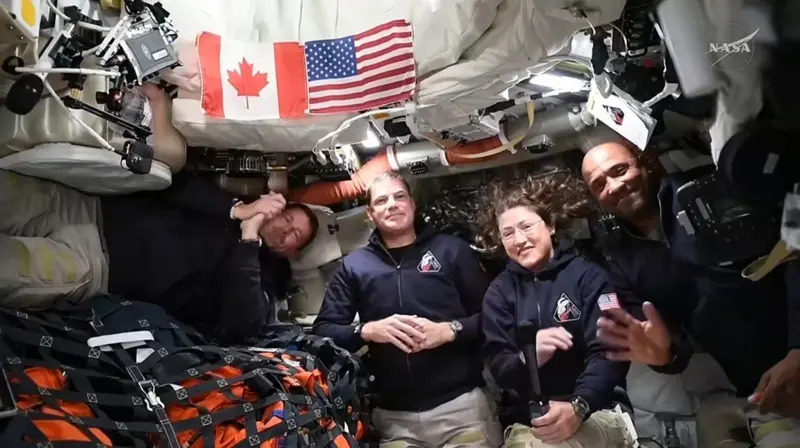
As a tech enthusiast, I find these thought experiments fun, but they also highlight why spacecraft engineering is one of the most brutal disciplines in the world. We can’t wait 80 years, let alone 14,000, to explore our neighborhood.
When NASA sends actual probes to Jupiter, they don’t drive cars. They use gravitational slingshots and advanced propulsion.
- The Galileo probe took about 6 years to reach Jupiter.
- The Juno spacecraft took nearly 5 years.
- The New Horizons probe, the fastest spacecraft ever launched at the time, flew past Jupiter in just 13 months on its way to Pluto, traveling at over 58,000 km/h!
Even at our absolute technological best, space travel requires extreme patience.
Why This Matters (And Why I Can’t Stop Thinking About It)
You might be wondering, “Ugu, why are we talking about 700-year car rides on a tech and metaverse platform?”
Here is my perspective: The sheer, terrifying scale of our solar system is the exact reason why human innovation is so relentless. Our physical bodies are confined by biology and physics, but our minds—and the technology we build—are not.
We are currently building digital twins of our world, simulating physics in the metaverse, and developing AI that can calculate orbital trajectories in milliseconds. We are pushing the boundaries of virtual reality so that one day, you won’t have to wait 5 years on a spacecraft to see the Great Red Spot; you might be able to put on a headset and explore a perfectly rendered, real-time data simulation of Jupiter’s atmosphere from your living room.
The universe makes me feel completely insignificant, yes. But it also fuels a deep, burning curiosity. It reminds me that every line of code we write, every AI model we train, and every virtual environment we build is a stepping stone toward understanding the infinite.
Because remember, the future is not fiction, it is being coded right here.
Now, I have to ask you: If you were forced to take this impossible cosmic road trip, knowing the time it takes, which vehicle would you choose and who would you take as your co-pilot? Let’s talk about it in the comments below! 👇