



When I look at the current trajectory of brain-computer interfaces, it feels like we are jumping straight out of a sci-fi novel and into reality. I’ve been closely monitoring Elon Musk’s Neuralink since its early days, and while their recent human trials have been nothing short of mind-blowing, the hardware side of things is about to get a massive shakeup.
Reports are surfacing that Neuralink is gearing up for its fourth-generation chip, and they might be shifting their manufacturing alliance. Instead of sticking with their previous partners, industry whispers from South Korea suggest that Samsung is stepping up to the plate to become the key manufacturer for this next-level neural hardware.
Here is exactly what is happening behind the scenes, why this shift makes perfect sense to me, and why this specific chip could change human biology forever.
The Shift: Why Samsung Over TSMC?

If you follow the semiconductor industry as closely as I do, you know that Taiwan’s TSMC is the undisputed king of chip manufacturing. They built the previous generations of Neuralink’s hardware. So, why the sudden pivot to Samsung?
It all comes down to the current AI gold rush.
- TSMC is Bottlenecked: Right now, TSMC’s production lines are absolutely swamped. Tech giants like NVIDIA and Apple are buying up massive amounts of capacity to fuel the AI boom. Getting priority on TSMC’s cutting-edge nodes is becoming incredibly difficult and expensive.
- The 4nm Sweet Spot: Instead of fighting for space on experimental 2nm or 3nm nodes, Neuralink is reportedly opting for Samsung’s 4nm production process.
- Stability is Everything: When you are building a chip that is literally going to be surgically implanted into a human brain, you don’t want experimental manufacturing. Samsung’s 4nm node is mature, highly stable, and ensures reliable, on-time delivery.
Musk is no stranger to Samsung, either. I’ve tracked their previous collaborations, and Musk has already trusted Samsung with hardware for Tesla’s autonomous driving and various AI chips. Strengthening this relationship just makes logistical sense.
The Real Game Changer: “Read and Write” Capabilities
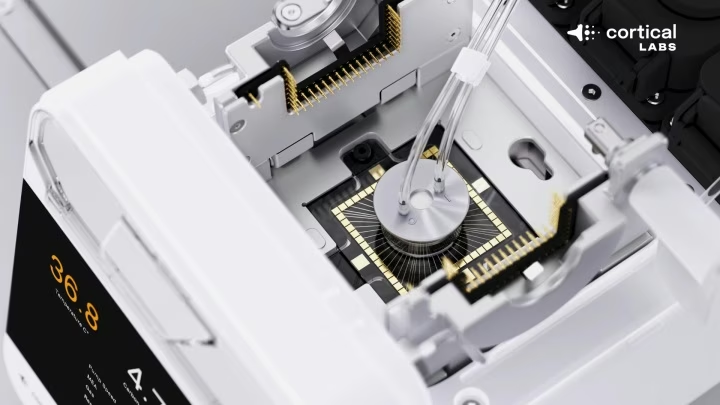
This is where the story gets incredibly intense. Up until now, Neuralink’s primary focus has been on reading brain signals—allowing paralyzed individuals to control cursors or play video games just by thinking. That alone is revolutionary.
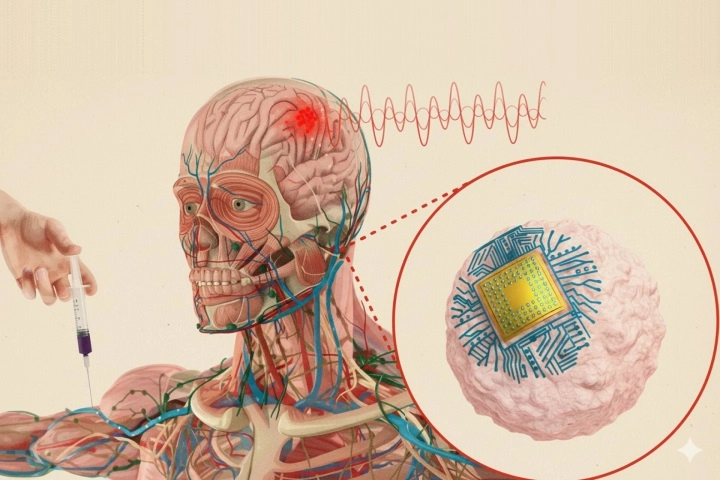
But the Gen-4 chip is aiming for something far more ambitious: Bidirectional communication.
This means the chip won’t just read what your brain is doing; it will be able to write data back into your brain.
- Bypassing Broken Biology: By sending data directly to the brain, this chip could theoretically stimulate neurons to restore lost functions.
- Curing Blindness: Musk has openly talked about the “Blindsight” project. If a user has damaged optic nerves but an intact visual cortex, a bidirectional chip could feed camera data directly into the brain, completely bypassing the eyes.
When I think about the implications of this, it gives me chills. We are moving from simply translating thoughts to actively editing human sensory input.
The Timeline: When Does This Become Reality?
Building something this complex takes time, but the roadmap is more aggressive than you might think. Based on the current industry leaks, here is the timeline I’m looking at:
- Early 2027: Samsung is expected to begin test production of the 4nm Neuralink chips.
- Late 2027: If the testing phases pass the rigorous safety and stability benchmarks, mass production will kick off toward the end of the year.
For Samsung, this is a massive win. Their foundry business has been aiming for strict profitability by around 2028, and securing a high-profile, futuristic client like Neuralink is exactly the kind of momentum they need to prove they can still compete with TSMC on the world stage.
My Final Thoughts
I spend my days analyzing the metaverse, AI, and digital integration, but Neuralink bridges the gap between software and our actual nervous system. Moving to a stable, mass-producible 4nm architecture with Samsung tells me that Neuralink is preparing to scale up. They aren’t just making prototypes for a handful of patients anymore; they are preparing an infrastructure for widespread medical (and eventually, consumer) use.
The technology is moving at a breakneck pace, and the line between human and machine is getting thinner every single day.
I have to ask, though—reading brain waves to control a mouse is one thing, but would you ever allow a company to install a chip that actively writes data back into your brain? Where do you draw the line? Let me know your thoughts down below.
